Monday, December 27, 2010

Weisbrot: Haiti is a US pawn in a brutal chessgame

Mark Weisbrot (for Guardian)

The polarization of the debate around Wikileaks is pretty simple, really. Of all the governments in the world, the United States government is the greatest threat to world peace and security today. This is obvious to anyone who looks at the facts with a modicum of objectivity. The Iraq war has claimed hundreds of thousands, and most likely more than a million lives. It was completely unnecessary and unjustifiable, and based on lies. Now, Washington is moving toward a military confrontation with Iran.

As Lawrence Wilkerson, former Chief of Staff to Colin Powell, pointed out in an interview recently, in the preparation for a war with Iran, we are at about the level of 1998 in the build-up to the Iraq war.
On this basis, even ignoring the tremendous harm that Washington causes to developing countries in such areas as economic development (through such institutions as the International Monetary Fund and World Trade Organization), or climate change, it is clear that any information which sheds light on U.S. “diplomacy” is more than useful. It has the potential to help save millions of human lives.

You either get this or you don’t. Brazil’s president Lula da Silva, who earned Washington’s displeasure last May when he tried to help defuse the confrontation with Iran, gets it. That’s why he defended and declared his “solidarity” with embattled Wikileaks founder Julian Assange, even though the leaked cables were not pleasant reading for his own government.

One area of U.S. foreign policy that the Wikileaks cables help illuminate, which the major media has predictably ignored, is the occupation of Haiti. In 2004 the country’s democratically elected president, Jean-Bertrand Aristide, was overthrown for the second time, through an effort led by the United States government. Officials of the constitutional government were jailed and thousands of its supporters were killed.
The Haitian coup, besides being a repeat of Aristide’s overthrow in 1991, was also very similar to the attempted coup in Venezuela in 2002 – which also had Washington’s fingerprints all over it. Some of the same people in Washington were even involved in both efforts. But the Venezuelan coup failed – partly because Latin American governments immediately and forcefully declared that they would not recognize the coup government.

In the case of Haiti, Washington had learned from its mistakes in the Venezuelan coup and had gathered support for an illegitimate government in advance. A UN resolution was passed just days after the coup, and UN forces, headed by Brazil, were sent to the country. The mission is still headed by Brazil, and has troops from a number of other Latin American governments that are left of center, including Bolivia, Argentina and Uruguay. They are also joined by Chile, Peru and Guatemala from Latin America.

Would these governments have sent troops to occupy Venezuela if that coup had succeeded? Clearly they would not have considered such a move, yet the occupation of Haiti is no more justifiable. South America’s progressive governments have strongly challenged U.S. foreign policy in the region and the world, with some of them regularly using words like imperialism and empire as synonyms for Washington. They have built new institutions such as UNASUR to prevent these kinds of abuses from the north. Bolivia expelled the U.S. ambassador in September of 2008 for interfering in its own internal affairs.

Is it because Haitians are poor and black that their most fundamental human and democratic rights can be trampled upon?

The participation of these governments in the occupation of Haiti is a serious political contradiction for them, and it is getting worse. The Wikileaks cables illustrate how important the control of Haiti is to the United States.

A long memo from the U.S. Embassy in Port-au-Prince to the U.S. Secretary of State answers detailed questions about Haitian president Rene Preval’s political, personal, and family life, including such vital national security questions as “How many drinks can Preval consume before he shows signs of inebriation?” It also expresses one of Washington’s main concerns:

“his reflexive nationalism, and his disinterest in managing bilateral relations in a broad diplomatic sense, will lead to periodic frictions as we move forward our bilateral agenda. Case in point, we believe that in terms of foreign policy, Preval is most interested in gaining increased assistance from any available resource. He is likely to be tempted to frame his relationship with Venezuela and Chavez-allies in the hemisphere in a way that he hopes will create a competitive atmosphere as far as who can provide the most to Haiti.”

This is why they got rid of Aristide – who was much to the left of Preval -- and won’t let him back in the country. This is why Washington funded the recent “elections” that excluded Haiti’s largest political party, the equivalent of shutting out the Democrats and Republicans in the United States. And this is why MINUSTAH is still occupying the country, more than six years after the coup, without any apparent mission other than replacing the hated Haitian army – which Aristide abolished – as a repressive force.

People who do not understand U.S. foreign policy think that control over Haiti does not matter to Washington, because it is so poor and has no strategic minerals or resources. But that is not how Washington operates, as the Wikileaks cables repeatedly illustrate. For the State Department and its allies, it is all a ruthless chess game, and the pawns matter. Left governments will be removed or prevented from taking power where it is possible to do so; and the poorest countries – like Honduras last year – present the most opportune targets. A democratically elected government in Haiti, due to its history and the consciousness of the population, will inevitably be a left government – and one that will not line up with Washington’s foreign policy priorities for the region. Hence, democracy is not allowed.

Thousands of Haitians have been protesting the sham elections, as well as MINUSTAH’s role in causing the cholera epidemic, which has already taken more than 2,300 lives and can be expected to kill thousands more in the coming months and years. Judging from the rapid spread of the disease, there may have been gross criminal negligence on the part of MINUSTAH – i.e. large-scale dumping of fecal waste into the Artibonite river. This is another huge reason for them to leave Haiti.

This is a mission that costs over $500 million a year, when the UN can’t even raise a third of that to fight the epidemic that the mission caused, or to provide clean water for Haitians. And now the UN is asking for an increase to over $850 million for MINUSTAH.

It is high time that the progressive governments of Latin America quit this occupation, which goes against their own principles and deeply held beliefs, and is against the will of the Haitian people.

Thursday, December 16, 2010

Michel Martelly, Stealth Duvalierist


By Jeb Sprague
...In the media coverage of Haiti's ongoing electoral crisis, presidential candidate Michel "Sweet Micky" Martelly, whom ruling Unity party candidate Jude Célestin edged out of Haiti's Jan. 16 run-off by less than 1%, has been portrayed as the victim of voting fraud and the leader of a populist upsurge against Haiti’s crooked Provisional Electoral Council (CEP).

Some have questioned his presidential suitability by pointing to his vulgar antics as a konpa musician over the last two decades, where he often made demeaning comments about women and periodically dropped his trousers to bare his backside. The real problem with Martelly, however, is not his perceived immorality, but his heinous political history and close affi liation with the reactionary “forces of darkness," as they are called in Haiti, which have snuffed out each genuine attempt Haitians have made over the past 20 years to elect a democratic government. Far from a champion of democracy, Martelly has been a cheerleader for, and perhaps even a participant in, bloody coups d'état and military rule.

Duvalierist Affi nities

Under the Duvalier dictatorship, Martelly ran the Garage, a nightclub patronized by army offi cers and members of Haiti’s tiny ruling class. At a recent press conference, Martelly spoke nostalgically of the Duvalierist era, when François "Papa Doc" Duvalier and later his son Jean-Claude "Baby Doc" enforced their iron rule with gun and machete wielding Tonton Macoutes, a sort of Haitian Gestapo. “Today the dog is eating its vomit," lamented Marcus Garcia of Radio Mélodie FM in a Dec. 8 editorial. While "Michel Martelly openly defends the Duvalier regime in a press conference,” the youth who have been duped into supporting him are “without memory of [the infamous political prison] Fort Dimanche-Fort La mort, without memory of the Nov. 29, 1987 electoral massacre,” when neo-Duvalierist thugs killed hundreds of would-be voters.

In a 2002 article, the Washington Post explained how the konpa singer was a long-time “favorite of the thugs who worked on behalf of the hated Duvalier family dictatorship before its 1986 collapse.” But the mainstream media of late has yet to pick up on the singer’s past affi liations. Duvalierist affi nities should not be taken lightly. Human rights groups such as the League of Former Political Prisoners and Families of the Disappeared compiled a partial list of several thousand of the Duvalier regime’s victims, which was published in Haïti Progrès in 1987, but total estimates of those killed under the U.S.-backed 29-year long dictatorship range from 30,000 to 50,000 people. After Baby Doc’s fall in February 1986, a mass democratic movement, long repressed by the Duvaliers, burst forth and became known as the Lavalas, or fl ood. Martelly quickly became a bitter Lavalas opponent, making trenchant attacks against the popular movement in his songs played widely on Haitian radio.

The Rise of Aristide and the 1991 Coup

Following his dramatic election with 67% of the vote in Dec. 16, 1990 elections, Jean-Bertrand Aristide, a former parish priest and Lavalas movement leader, was inaugurated on Feb. 7, 1991 as Haiti’s democratically elected president, but then deposed by a military coup, for the fi rst time, on Sep. 30, 1991, only eight months into his fi rst term. Martelly “was closely identifi ed with sympathizers of the 1991 military coup that ousted former President Jean- Bertrand Aristide,” the Miami Herald observed in 1996.
The military junta that ruled Haiti between 1991 and 1994 was bloody and brutal. According to Human Rights Watch, some 5,000 people were murdered by the junta’s soldiers and paramilitaries, and thousands more tortured and raped. Hundreds of thousands were driven into hiding and exile. Martelly became the coup’s joker, applauding the junta while it was in power. He was friends with the dreaded Lt. Col. Michel François, who, as Police Chief, was the principal director of the coup's executioners. For instance, according to a fact-fi nding report by former U.S. Attorney General Ramsey Clark's Haiti Commission of Inquiry into the Sep. 30 Coup d'Etat, François drove a red Jeep leading several buses full of soldiers into large crowds demonstrating against the coup on the Champ de Mars in front of the National Palace on the night of Sep. 30, 1991. (A January 1991 coup d'état, nine months earlier, had been turned back by such massive demonstrations.) The crowds applauded the soldiers, thinking they had come to put down the coup. Instead, on François' signal, the bus windows opened, then police and soldiers mowed down hundreds of demonstrators with machine- gun fi re.

Martelly claims his moniker “Sweet Micky” (also the name of his band) came from a nightclub performance in 1988, but it's a nickname Col. Michel François also shared. U.S. documentary fi lmmaker and writer Kevin Pina recalls a concert at the El Rancho Hotel in Port-au-Prince in July 1993 where Colonel “Michel François, ... who was also called ‘Sweet Micky’ after the coup of 1991 because people claimed he would have a broad smile on his face as he killed Lavalas partisans, took to the stage” and “held up Martelly’s hand announcing to the crowd, ‘This is the real Sweet Micky.’” Pina adds, “That’s the fi rst time I ever heard Martelly referred to as such.” One concert that Martelly performed at the request of Michel François and military junta leaders was billed as a demonstration against Dante Caputo, the United Nations special representative to Haiti who was attempting to deploy UN human rights observers into the country. At that same time, the Haitian army and the infamous FRAPH death squads were slaughtering members of the anti-coup resistance.

Martelly, known at the time to have many friends throughout the military, explained to the Miami New Times: “I didn’t accept [the request to play] because I was Michel François’s friend, I did not accept because it was the Army. I went because I did not want Aristide back.” Most shockingly, Father Jean- Marie Vincent (who was killed by a coup death-squad on Aug. 28, 1994) accused Martelly of accompanying the Haitian police on deadly night-time raids to track down suspected Lavalas resistance leaders. “We have information that Michel Martelly has been traveling with death squads from the police when they go out at night to hunt and kill Lavalas leaders,” Vincent told fi lmmaker Pina in a videotaped interview.

After Aristide returned to Haiti in October 1994, Martelly spent most of his time living “in a condo on Miami Beach,” where he “had a regular gig at the Promenade on Ocean Drive, where his band Sweet Micky performed compas, rhythmic Haitian dance music,” according to the Miami New Times. In 2000, Aristide was overwhelmingly elected to a second term. But the George W. Bush administration, also coming into power at that time, launched a destabilization campaign to overthrow Aristide, which is detailed in Peter Hallward’s 2007 book Damming the Flood. Martelly became a willing participant in that germinating coup.

In 2002, the noose was tightening around Aristide. Former soldiers had attempted a coup on Dec. 17, 2001, and the U.S. aid embargo was taking its toll. Nonetheless, Aristide’s government had launched several social investment programs including food cooperatives, the building of unprecedented numbers of schools, subsidization of school books, and other literacy promotion. In his 2002 Carnival song, Martelly referred “to recent riots at a dockside warehouse here that were sparked by word that offi cials from Aristide’s party were stealing from a food program for the poor,”wrote the Washington Post. Although corruption under Aristide paled next to that under the 1991 military junta that Martelly supported, his Carnival song hit a nerve. By 2003, Martelly was on average spending $150,000 to $200,000 on his fl oats for Port-au-Prince’s annual Carnival, according to the Miami Herald. During Carnival, in which mockery of the government is a tradition, Martelly aimed extremely sharp and vulgar criticism at Aristide. During that time, “Kolonget manman ou Aristide" was one of Sweet Micky's refrains, perhaps the worst curse one can make in Kreyòl, meaning literally "the slave master fucked your mother.”

The 2004 Coup and its aftermath

In February 2004, Aristide was driven from power yet again. A U.S. Navy Seal team took the president from his home – Aristide called it “a modern kidnapping” – and sent him into exile in Africa, where he remains to this day. In the build-up to that coup, socalled “rebels” composed of former Haitian Army soldiers and former FRAPH death-squad paramilitaries, ran raids into Haiti’s Central Plateau and North, savagely executing dozens of Aristide supporters, government offi cials and some of their family members. Wyclef Jean, a friend of Martelly, described the “rebels” as freedom fi ghters “standing up for their rights.” Following the coup, U.S., French, and Canadian soldiers occupied Haiti and set up an illegal de facto regime. As outcry against the February coup grew, Martelly held a concert in Portau- Prince in April 2004 to counter calls for Aristide’s return. The concert was entitled: “Keep him out!”

In September 2004, Tropical Storm Jeanne fl ooded the northwest city of Gonaïves, killing some 3,000 people. U.S.-installed de facto Prime Minister Gérard Latortue was widely criticized for his ineffective and belated response to the disaster. One of his few initiatives was to hold a fundraiser with business leaders of the Haitian American Chamber of Commerce. Martelly, who had used his music only to undermine Aristide, headlined the Latortue gala, the Miami Herald reported. In 2006, with Lavalas militants driven into hiding, jailed, or murdered, the Latortue regime held an election which brought former-President René Préval back to power. The Lavalas base supported Préval, thinking he would bring Aristide back, free all the coup's political prisoners, and reverse the neoliberal march of the Latortue dictatorship.

But Préval betrayed these expectations, creating a government dominated by coup supporters and working closely with the foreign military occupation which had now been handed off to the UN. He soon became reviled by large swathes of the poor for failing to enable Aristide's return or to restart many of Aristide's popular social investment programs. By 2009, Préval's CEP banned Aristide's party, the Lavalas Family (FL), from partial senatorial elections and later presidential and parliamentary elections. Préval's weak response to the catastrophic January 2010 earthquake accelerated his decline.

The 2010 Selections and Martelly’s Rise

Finally, the CEP fi xed general elections for Nov. 28, 2010. The Associated Press reported Dec. 10 that Martelly’s “political popularity took off in the weeks before the vote and seems to have surged since it appeared he had been narrowly disqualifi ed from the race.” This surge owes a lot to Martelly’s hi-tech campaign, which outgunned and outclassed his 18 rivals by launching tens of thousands of computerized messages asking people to vote for him. Martelly hired a slick Spanish public relations fi rm to manage his campaign and break into the spotlight. “The Madrid-based Sola, who played an indispensable role in getting Mexico's Felipe Calderón into the president's chair in 2006, has been running the Martelly campaign for the past seven weeks, which goes a long way toward explaining how the antic-prone musician suddenly emerged as a leading contender for Haiti's presidency,” reported The Toronto Star on Dec. 6.

Calderón is widely considered to have stolen the 2006 election from leftist candidate López Obrador, a dirty victory which pleased Washington. The fi rm Ostos & Sola has also helped the campaign of Lech Walesa, the transnational elite's darling in Poland. Damian Merlo, Ostos & Sola's executive director and Martelly campaign point-man, worked on the presidential campaign of U.S. Republican John McCain before joining the fi rm. All of these associations raise questions about what "hidden hand” may be behind the Martelly campaign. “Today’s $50 million question: who is the Miami businessman who reached out to Antonia Sola to be Michel Martelly’s campaign fi xer?” wrote the Toronto Star. “Sola smiles at the question, all Spanish charm. He’s not saying. ‘A friend, a businessman, presented Michel to us in the U.S.,’ he says.” The key to Sola’s formula for Martelly was to present him as an “outsider,” even though he had been the ultimate “insider” with the procoup bourgeoisie that overthrew Aristide twice.

On Nov. 28, as it became apparent that Haiti’s election was riddled with fraud and disenfranchisement, Martelly joined with 11 other candidates to call for election’s annulment. But later that day, Edmond Mulet, who heads the UN Mission to Stabilize Haiti (MINUSTAH), personally called Martelly to tell him that he was leading, Al Jazeera reported. Sweet Micky, without even telling the other candidates in the impromptu front, jumped back in the race. The next day, Martelly denied he had ever signed the joint letter read in his nodding presence at the candidates’ joint press conference on Nov. 28 calling for the election’s annulment. He explained “his change of position by saying his candidacy had been leading in polling stations where there had not been fraud,”Chicago’s Daily Herald reported.

“He saw all the fraud happening on election day,” motorcycle taxi driver Weed Charlot told IPS about Martelly. “But now he sees he has some votes and power. So he’ll accept the election.” The same day he spoke to Martelly, Mulet called candidate Mirlande Manigat to also tell her she was leading in the vote. She too pulled out of the candidates’ annulment front. Then, on Dec. 7, the CEP announced that Manigat was leading with Unity's Célestin in second-place, and hence the second-round. Martelly, who apparently came in third with just over 21%, about 6,800 votes short of Célestin, switched back into protest-mode. Popular anger was already high with Préval and the CEP for excluding the Lavalas Family (only 23% of Haiti's 4.7 million voters turned out, according to the CEP). The election mess was the last straw.

Furthermore, there was rage at MINUSTAH for attempting to cover-up that its troops in Mirebalais had accidentally introduced cholera into Haiti, where the disease is now a pandemic. With Wyclef Jean at his side predicting “civil war,’ Martelly channeled the deep popular frustration to attack the government for “robbing” him of a victory he claimed should have been his. The result has been a wave of election-related mayhem. “It is clear that most of the acts of violence in Haiti around the election have been carried out by Martelly’s supporters," said Ricot Dupuy of Radio Soleil d'Haïti, based in Brooklyn. “Thousands of his supporters have paralyzed the capital and other cities in protests that included attacks on public buildings,” Reuters reported. Some people have died in driveby shootings and skirmishes between Martelly's supporters and those of Célestin. In late November, Haitian journalist Wadner Pierre witnessed a group of Martelly supporters at the Building 2004 voting center in Port-au-Prince throw rocks and chant: “If you don’t let us vote, we will burn this building down.” Martelly supporters are responsible for burning a number of government buildings in the capital and in the southern city of Aux Cayes. They have also assaulted some opponents, while Célestin backers have been accused of killing at least one Martelly supporter.

Former Col. Himmler Rébu said on Haiti's Signal FM that he had witnessed the tactics of Martelly's troops in the street. "This is not something simple," he said, a Kreyòl understatement that implies there are hidden forces at work. In short, there are two movements in Haiti today which are being simplifi ed into one. There are the Lavalas masses mobilized against Préval's fraudulent exclusionary elections and the UN occupation, as well as for Aristide's return.

Then there is the bid by Martelly, using his and Wyclef's celebrity and Ostos & Sola's scientifi c techniques, to coopt this movement to bring him to power. To confuse people, he equates Préval with Aristide, pretending they are the twin governments responsible for the "failed policies” of the past two decades. In reality, Haiti's sad state today can be mostly attributed to the 1991 and 2004 coups which Martelly supported. Furthermore, the power behind Préval - Haiti's pro-coup bourgeoisie - is close to Martelly, and imperialism is not threatened by him. We are witnessing a fi erce rivalry between two factions which share the same two backers: Haiti's anti-Lavalas business class and transnational elites with the U.S. as their most powerful state apparatus.

As Martelly explained to the Huffi ngton Post’s Georgianne Nienaber, he is very much in tune with Washington’s prescription for Haiti, supporting “anything that will help exports... anything that will help the private sector.” Secondly, Martelly does not support the people’s call to end the UN occupation of Haiti: “I want to say to the international community, the diplomatic corps, and non-governmental agencies that we need them,” he said in the same interview. Ultimately, Martelly is not a “dark horse” candidate, as Canada’s Globe & Mail suggests, who has come out of nowhere to lead “Haiti’s young and dispossessed.” He is a man with a long history of service to Haiti’s “Morally Repugnant Elite.” During his campaign, Martelly was fond of saying that in Haiti “it’s more about the man than about the plan.” If this is true, Haitians should have grave misgiving about a man who has backed two coup regimes that used death-squads to silence the poor majority and throttle Haiti’s nascent democracy.


Source, Haitliberte:http://www.haiti-liberte.com/archives/volume4-22/MichelMartelly_Stealth_Duvalierist.asp

Thursday, December 2, 2010

Popular Anger Unabated over Chaotic Polls

next to the polling station at Building 2004 in the neighbourhood of Delmas.
Credit:Wadner Pierre/IPS

Buy this picture

By Ansel Herz and Wadner Pierre

PORT-AU-PRINCE, Dec 2, 2010 (IPS) - Furious demonstrations continued across Haiti on Wednesday following the Nov. 28 highly contested election in which thousands found themselves unable to vote.

Rock-throwing and road-barricading protests were reported in Les Cayes, Hinche, Petit Goave and Archaie. On Tuesday, demonstrators clashed with United Nations peacekeeping troops in St. Marc and Gonaives. The U.N. mission issued several alerts to its personnel restricting movement.

Twelve of 19 presidential candidates called on Sunday for cancellation of the election results. They allege widespread fraud by the government in favour of the ruling party's candidate, Jude Celestin.

Konpa singer Michel Martelly and another leading candidate have since backed away from the allegations.

"He saw all the fraud happening on election day," motorcycle taxi driver Weed Charlot told IPS. "But now he sees he has some votes and power. So he'll accept the election."

Haiti's Provisional Electoral Council (CEP) and the primary international observer mission said despite "irregularities", there is not sufficient reason to invalidate the election.

"If it is requested, I am sure the international community stands ready to assist in the investigation of irregularities reported, said Assistant Secretary General of the Organisation of American States Albert R. Ramdin on Wednesday.

The U.S. Embassy supports the recommendations of the OAS, a spokesperson told IPS.

IPS witnessed several polling stations in the capital city that opened hours late on election day. Hundreds of Haitian citizens unable to find their names on electoral lists were turned away.

At Building 2004 in central Port-au-Prince, chaos reigned.

"We come to vote this morning and we can't find ballots to vote. A group of Jude Celestin partisans came with their weapons and troubled the poll station. Nobody stopped them," voter Celito Cesard told IPS.

In the afternoon, crowds chanted, "If they prevent us from voting we will set a fire." Some ran into the building, grabbed ballot boxes and threw them into pools of water in the street.

The Canadian Broadcasting Corporation reported brazen ballot stuffing at another polling station.

Outside the capital city there were only 39 registered voters at Camp Corail, a planned settlement for at least 6,000 victims of January's earthquake. Camp residents whose registrations had not been updated were so enraged they attacked the polling station with rocks, forcing its closure. U.N. police were overwhelmed and forced to evacuate the camp.

Sources in Hinche, a medium-size city in the Haiti's central countryside, told IPS most people stayed home from the polls.

So did Joel St. Jerome Jacques, still living with his family under a tarp in Petionville. He sat glumly on a concrete step on the outskirts of a makeshift camp on Sunday across from a polling station. A raucous demonstration of outraged voters waving Martelly posters drew closer.

"The election is an element of development, it's a civic right that we're told we should exercise since we're children. But for me this election didn't really happen," St. Jerome Jacques told IPS.

He lost his national identification card and tried, in vain, to get a new one from a nearby government office before election day.

"Many people couldn't find their cards - they lost them and that's a reason they've taken to the streets," he said. "I've been here since Jan. 12! They said they would help us get out of here. But nothing's happened, they don't do anything serious."

Votes are now being counted in tabulation centres and the final results are to be announced on Dec. 20. There will be a short period for candidates to officially contest the outcomes, before a runoff between the top two vote-getters on Jan. 16.

U.S. Senator Richard Lugar blamed Sunday's disorder on outgoing President Rene Préval. Préval's government dismissed his recommendations in a mid-summer report for the appointment of a new CEP and inclusion of parties like Fanmi Lavalas, barred from the ballot, in the election.

"As a result, the elections have been fraught with numerous reports of irregularities and fraud," Lugar said in a Wednesday hearing of the U.S. Senate Foreign Relations Committee.

Six Haitian civil society groups also issued a statement condemning Préval and the CEP for organising a highly flawed election and the anger that followed.

Préval is painted as a passive and aloof head of state in two secret State Department cables recently released by Wikileaks. He tolerates little dissent from his cabinet and doesn't read the news, but is prone to micro-management, they say.

The cables constitute an exhaustive profile of Préval, analysing his major relationships and mentioning "special intelligence" on his medical habits. He takes two- to three- hour naps every afternoon and is rumoured to be drinking heavily.

His nationalism and independence are seen as added difficulties. The cables speak of "finding creative ways to work with him, influence him" and "manage" him.

"He remains skeptical about the international community's commitment to his government's goals, for instance telling me that he is suspicious of how the Collier report will be used," says a June 2009 cable by the George W. Bush administration's U.S. ambassador to Haiti.

British economist Paul Collier authored a U.N.-commissioned report on Haiti in January last year. It called for major private investments in the garment-making sector and in agricultural exports to create jobs. Since then, the document has been touted by the international community and Haitian government as a foundation for its long-term development strategy.

There are a further 1,212 cables from the U.S. Embassy in Port-au-Prince still unreleased to the public as of this writing. An embassy spokesperson condemned the leak in a statement to IPS.

(END)

Wednesday, December 1, 2010

Haiti Flawed and Undemocratic Elections Confirmed

 Photos by Wadner Pierre
Hoping the CEP, UN and the Haitian Government have courage to say this is my fault. Haitian people deserve better and much better than the flawed. Massive fraud, irregularities and low-turnout that what marked the Nov. 28 Presidential and Legislative Elections in Haiti. I took these at the Poll Station, Building 2004, Delmas the former 'Haitian military aviation.' It was about 1:30 when a group of protesters came and chanted "if they don't let s vote, we will put fire." They held the photos of Presidential Candidate Michel Martely.

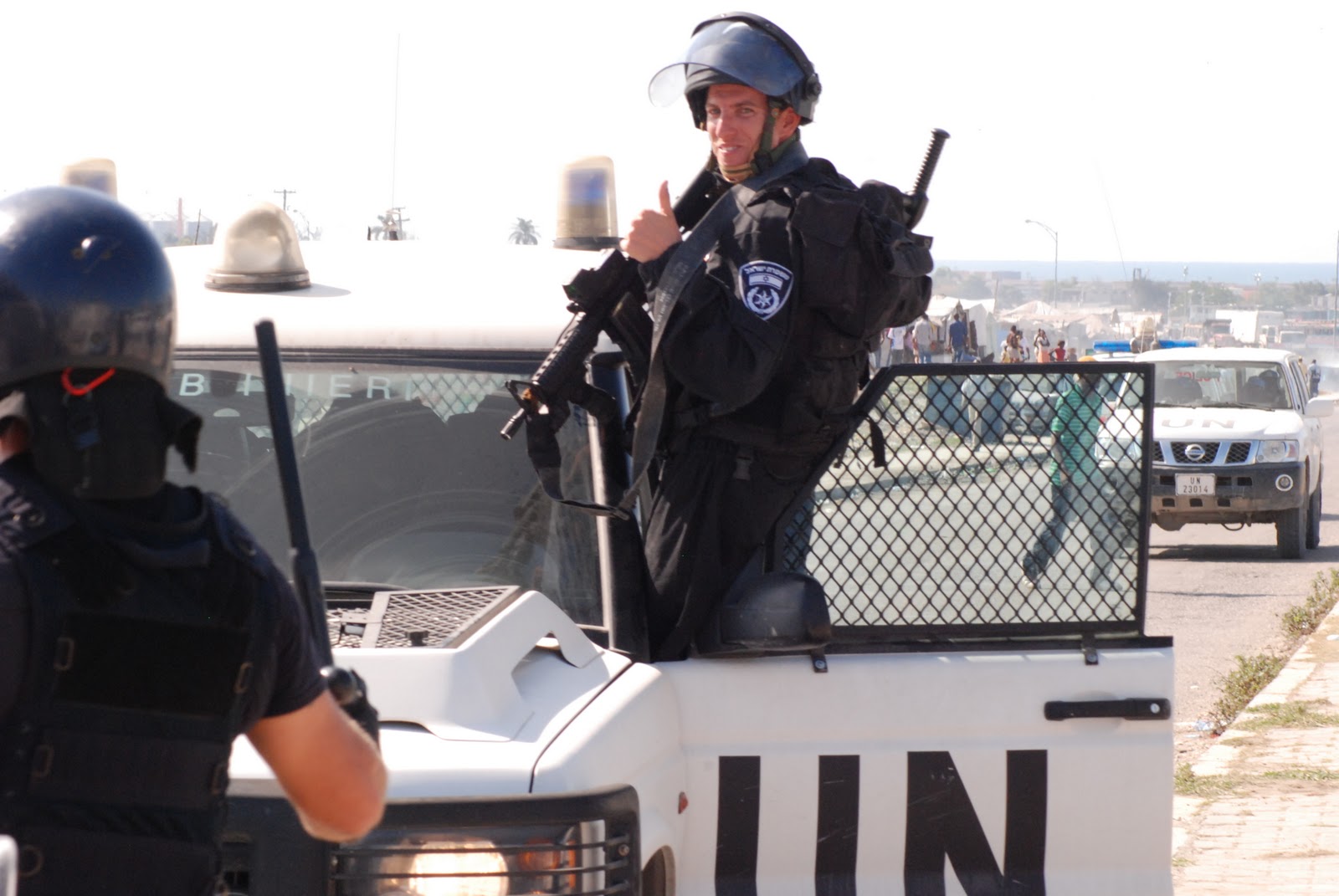
There were Haitian police officers at the building. UN/Israelite and Italian special forces were one  or two minutes from the poll station.

 Even the low participation of Haitian voters in these controversial elections, those who went to vote had difficulties to find their names. But they found the names of their neighbors who died in the Janv. 12 earthquake. In many cases, particularly Cite Soleil, voters were forced or pressured to vote against their will. " They took my ballot and beat me up because I refused to vote for Jude Celestin," said Resume, a voter in Cite Soleil while crying. Mr. Resume's situation was similar to many other voters.

Sunday, November 28, 2010

Haiti:Church Holding Prayer on the Eve of Undemocratic Elections

by Wadner Pierre
A woman praying at Sainte Claire's Parish prior to the flawed Presidential and Legislative Nov. 28 Elections in Haiti.Photo by Wadner Pierre
On top of the hill of Demals 33, Ti Plas Kazo, 15 minutes from the Conseil Electoral Provisoire or CEP (Provisional Electoral Council), formerly headquarter, and 10 minutes from UN compound at the Toussaint International Airport, located Sainte Claire’s Parish. This Parish was the Parish of former Priest and political prisoner of UN backed de facto government 2004-2006, father Gerard Jean-Juste. Father used to pray against the coup d’état –and for the return democratic elected President Jean-Bertrand Aristide and those who had been murdered, tortured and imprisoned illegally because of their political. On Nov. 26, Sainte Claire’s Parish held a seven-hour prayer to ask God to watch over the upcoming flawed Presidential and Legislatives Elections.
As it always shows in the mainstream, when Haitians refuse to swallow undemocratic elections and demonstrate in the street to demand that democratic elections, the mainstream media in the US, Europe, Haiti, Canada and so, portray them as rioters. The ironic thing is, these media refuse to agree that Haitian people are people of faith…and when the uncertainties come on the way, they use different tools like pacific protestations, religious, including Vodou ceremonies to pray their God to ask for direction. This is what Haitian people are also about. Before the decisive battle to free Haiti from French domination, the former slaves held a Vodou ceremony in North of Haiti, Bois-Caiman to pray and ask their God to assist them.
It must be noticed, churches holding prayers prior to the elections are a new form for people to say “God we don’t know where we are going. We don’t know what to do. Please, help us.” That was why the first time many churches whether Protestant of Catholic holding special prayers for elections. It is obvious that the Nov. 28 elections are bias and fraudulent –if they are not, perhaps, only the CEP, Haitian government and UN can see it. The following statement can only be heard from Edmond Mulet, the representative of the UN-Secretary General in Haiti. “The organization of these elections is is better than the previous years,” said Mullet. Of course, Mr. Mulet used radio Metropole, a right-wring radio in Haiti to make this statement.

 
In many corners of the Haiti’s capital, Port-Au-Prince many churches holding special prayers prior the controversial elections. “This time things (refer to the elections) are more fragile and uncertain, that’s why we need to pray,” said Mrs. Blan, a parishioner of Sainte Claire when asking why she came to spending her night praying.
The ‘imported ’Cholera outbreak has not killed Haitians, but has also destroyed the Haitian good habits whether at churches or on the streets. People use to embrace each other when wishing peace at the churches, but for the past several Sundays, they forcedly do that to prevent them from infecting by cholera. “Look the person next to you, and said “”Jesus loves you”,” said father Patrick Plaisival who celebrated the mass to close the 7-hour prayer. Father Plaisival also kept reminding people during the mass to be cautious and apply the hygienic rules to avoid catching the cholera. “Brothers and sisters, be careful, watch  your hands after using the bathroom – before  eating and touching your babies… that’s all you need to do… just do it.”
Father Gerson Charles, the pastor of Sainte Claire’s church who claimed to receive a message to hold these seven-hour prayer while celebrating the mass at Sainte Claire’s altar. “ I received this message when celebrating a mass here at the altar,” pointing his finger in direction of the altar…”the message said do a prayer on the Nov. 26 before the elections,” said Fr. Charles. Father Charles acknowledged cautiously that things are more difficult after the earthquake and the ongoing cholera outbreak. “The bishops share my idea. The church can only pray. My hope is to see things change in the country. I hope people do the best choice,” implied fr. Charles.
One thing Fr. Charles failed to say is that the same church refused to offer its support to democratic elected President Jean-Bertrand Aristide in the early 2000 until 2004, needless to say to help him to return to his country. The other things the Fr. Charles may not quietly understand is that, the majority of people have no preferred Presidential and Legislative candidates since the exclusion of Fanmi Lavalas, Haiti’s largest the political party, or the party of the majority.
From the organizational structure to distribution the IDs to people and to journalist to cover the poll; this electoral process has irregularities in its all structural body. Voters do not know exactly where to go to vote. The CEP sent message text in which there is a number that voters can call to figure out their poll station. Still this method does not work because when calling this number it is always busy.
While churches praying for the elections, many people argued that the elections have been done, is the way to say they have been sold. The CEP was appointed by President Preval – and Mr. Preval closest friend, member of his party, Jude Celestin is in the race. Critics said that Mr. Preval use the states resources to back up presidential candidate Celestin’s campaign. After the Nov. 28 Elections/Slections, Haitian will continue to struggle for Social Justice even it may remain fragile with the UN occupying force in Haiti’s soil.
Meanwhile, United States, France Canada or the International Community continue to show its real face which is: sponsored and financed coup d’état and undemocratic, unfair, fraudulent and non-free elections in Haiti like in Honduras and other parts in the World. 

Haitians to Refuse Tomorrow's "Selections"

 Living in tents, dying of cholera, the majority can't vote for their candidate anyway
by Wadner Pierre
Electoral signs in Port-Au-Prince.
The faces of candidates from 15 parties, 
including Haiti's most popular,
Fanmi Lavalas, are missing—
banned from running in elections.
Photo: Wadner Pierre


HAITI—On the eve of presidential and legislative elections in Haiti, skepticism and disenchantment among Haitians is widespread.
"I am not going to vote," said Elause Jacques, a mother of two who runs a cyber cafe with her husband in Port-au-Prince. "I have no candidate."

Jacques' sentiment is shared by many Haitians, who may be turning away from the polls by the millions in an act of silent protest against the exclusion of Haiti’s popular political party, Fanmi Lavalas (FL), and the spending of millions on elections instead of badly needed healthcare and infrastructure.

Friday, November 26, 2010

HUMAN RIGHTS GROUPS EXPRESS CONCERNS ABOUT HAITIAN ELECTIONS IN THE MIDST OF THE CHOLERA EPIDEMIC

Experts will be in Haiti for the elections, Sunday, November 28

Washington, D.C. -. A delegation of U.S. and Haitian human rights organizations are in Haiti as unofficial election and human rights observers to monitor the Presidential and parliamentary elections scheduled for Sunday November 28.  The delegation is concerned that the rapid spread of a cholera epidemic across the country could gravely affect voter participation and threatens the validity of the election process. The group will be in Port-au-Prince and surrounding areas from Monday, November 22 through Wednesday, December 1.

Over the last several months, organizations represented in the delegation have been monitoring the situation on the ground. Despite overarching concerns about the increasingly desperate situation of Haiti’s homeless Internally Displaced Persons (IDPs) and about the exclusion of a number of political parties from the electoral process, representatives of the organizations and partners have been preparing in good faith to observe events during Haiti’s elections.  There is a particular concern of insufficient preparation and response on the ground from those responsible for curbing the cholera epidemic, including international NGOs and international donor nations.  With such pressing concerns unresolved, many members of Haitian civil society organizations, as well as numerous Presidential candidates, believe it nearly impossible to hold elections that would meet the most minimal standards of fairness and credibility at this time.

While in Haiti the delegation will monitor the human rights and political situation surrounding the elections, with particular attention to those most affected by the Quake, including police and U.N. response to protests, possible voter boycotts, voter access and participation levels, the cholera epidemic response; and the status of overall relief efforts. The delegation’s members will be in close contact with an array of local and national civil society organizations during their stay.

Available for interviews:

Melinda Miles, English and Haitian Creole
Director, Let Haiti Live, a project of TransAfrica
Haiti Cell +509-3855-8861 US cell 413-923-8345 mmiles@transafricaforum.org

“Cholera is a game changer in the most fundamental sense. It is an immediate and critical crisis that requires all hands on deck in response. It is not for us to predict when the crisis will level off. What we can say, definitively, is that now is that the time for focus on the human needs first and not politics.”

Etant Dupain, English, Haitian Creole and Spanish
Bri Kouri Nouvèl Gaye, Noise Travels, News Spreads
Haiti Cell +509-3497-1717 gaetantguevara@gmail.com

“Although the elections are necessary, in the midst of a humanitarian crisis there needs to be more attention to vulnerable populations. The NGOs have not responded adequately to the crisis and everyday there are more people dying, more people becoming infected due to a lack of potable water.  Attention needs to be paid to the people who continue to live under tarps today.  It is sad because these elections will not change anything, you see many people expressing their lack of support for the process.”

Alex Main, English, French and Spanish
Policy Analyst, Center for Economic and Policy Research
Haiti cell +509-3855-8861 US cell 202-531-7585 main@cepr.net

 "These elections were already highly problematic before the cholera epidemic began to spread.  Haiti's electoral authority - the CEP - suffers from a lack of credibility; legitimate parties have been excluded from participating in the legislative elections; and very few effective measures have been taken to ensure that Haiti's over 1.3 million displaced people would have access to the polls.  As a result of these problems, there was already a high probability that voter turnout would be very low and that the elections would be widely seen as illegitimate.”         

Jacques Etienne Morial, English
Co-Director, The Louisiana Justice Institute
Haiti Cell: +509-3885-9248 US Cell 504-628-5517 Jacques@LouisianaJusticeInstitute.org;

“As respectful, understanding and supportive as we are of the determination of Haiti to assert its independence and stand on its own feet, the growing cholera epidemic imperils the legitimate elections that Haitians so urgently need to achieve this noble goal. Moving forward under the prevailing conditions undermines public confidence in any outcome that the people of Haiti deserve and need to move their recovery forward.”

For more information or to schedule interviews contact members of the delegation directly or contact Joia Nuri, 240-603-7905 or Dan Beeton, 202-239-1460.

Sunday, November 21, 2010

Haitian Photojournalist Addresses UCSB Audience

http://www.independent.com/news/2010/nov/21/haitian-photojournalist-addresses-ucsb-audience/?print

Wadner Pierre Speaks About His Experience Covering Manmade and Natural Disasters at Health in Haiti Event

Sunday, November 21, 2010
Wadner Pierre was studying Computer Science in 2004 when Haitian President Jean-Bertrand Aristide was overthrown in a coup d’état. Soon after, Pierre’s step-father, a Catholic priest who protested Aristide’s overthrow, was thrown in jail.
At that point Pierre decided he could no longer continue his studies without taking a stake in Haiti’s future. He dropped out of school, bought a camera, and started taking pictures of Haiti’s destitute population, selling them to human rights agencies and foreign press outfits.
One of the foreign correspondents that Pierre met while taking photos was Jeb Sprague, a reporter for the Inter Press Service news agency. Sprague, now a graduate student in sociology at UCSB, brought Pierre to Santa Barbara to speak this week at a presentation hosted by UC Haiti Initiative (UCHI), a system-wide effort to dedicate the University of California’s human resources to provide aid and relief to Haiti.

Saturday, November 20, 2010

Unrest 'must not stop Haiti polls' - Americas - Al Jazeera English


Elections should take place despite outbreak of deadly disease and anger against peacekeepers, UN mission chief says.
Last Modified: 20 Nov 2010 02:12 GMT
Anger over the cholera outbreak has spilled over into protests against the UN presence in Haiti [Reuters]
The head of the UN mission in Haiti has said the November 28 elections will be held despite the cholera outbreak that has killed more than 1,000 people and the violence against peacekeepers.
At least 1,186 people have been killed by the disease in recent weeks in the Caribbean nation, prompting many people to question the wisdom of holding the national elections.

But speaking to Al Jazeera on Friday, Edmond Mulet, the head of the UN Stabilisation Mission in Haiti (Minustah), said: "The issue of cholera is not a reason not to have elections.
"I think that elections are important for the political stability, for the social stability of the country, for the reconstruction of the country.

Thursday, November 18, 2010

Cholera Epidemic: President Jean-Bertrand Aristide Breaks the Silence

By Wadner Pierre


As the date for Haiti holding its General Elections approaches, more political leaders speak out over the credibility of the upcoming Elections. Many national and international political leaders, especially United States lawmakers, like D-Congresswoman Maxine Waters –other forty-four members of the US Congress –and the Rep-Senator Richard G. Lugar Fanmi Lavalas (FL), Haiti’s largest and most popular political party reiterated its position to boycott the Nov. 28 elections. Coming out on his silence, the FL’s National Representative, President Jean-Bertrand Aristide denounced the electoral process and the exclusion of his party in the race. President Jean-Bertrand- Aristide breaks His Silence .

Sunday, November 14, 2010

Haiti: Cholera Killed Over 900 People -Hundreds Deceased Names Remain in the Electoral Lists

By Wadner Pierre

Haiti prepares to hold controversial elections, natural disasters and disease may force the Haitians authorities to reschedule the Presidential and Legislative Elections. On January 12, 2010, a 7.0 magnitude earthquake hit the western and southern parts of Haiti. Over 300,000 people perished, and more than a million were left homeless. This tragedy brought the world together to help Haiti in our time of need. Ordinary citizens from all over the world sent their US dollars and Euros etc, to aid Haitians.


Unfortunately, as it is always been, the money was mostly used to pay for the UN and major NGOs’ bureaucracies, instead of helping the victims of the earthquake. Haiti’s “allies” met and promised several billions of dollars for the reconstruction of the country. Ten months later, the majority of earthquake’s survivors continue to live under makeshift tents and tarps. In the middle of this tragedy combined with empty promises, Haitians have kept their hope alive, and will be forever united. Haitians continue to support each other in any way they can. The world has praised Haitians’ courage. Though the Haitian government shows its incapacity to govern the country, Haitians remain faithful to Haiti’s noble democratic heritage and are eager to vote to choose their leaders in fair, free, inclusive and democratic Presidential and Legislative Elections.

Saturday, November 13, 2010

President Jean-Bertrand Aristide, "Selections Not Elections"

Exclusive Interview with Former Haitian President Jean-Bertrand Aristide

Interview with Nicolas Rossier – November 2010

Currently in forced-exile in South Africa, former Haitian President Jean-Bertrand Aristide is still the national leader of Fanmi Lavalas – one of Haiti's most popular political parties. A former priest and proponent of liberation theology, he served as Haiti's first democratically elected president in 1990 before he was ousted in a CIA backed coup in September 1991. He returned to power in 1994 with the help of the Clinton administration and finished his term. He was elected again seven years later, only to be ousted in a coup in February 2004. The coup was lead by former Haitian soldiers in tandem with members of the opposition. Aristide has repeatedly claimed since, that he was forced to resign at gunpoint by members of the US Embassy. US officials have claimed that he decided to resign freely following the violent uprising. He now lives in exile in South Africa where he still waits to get his diplomatic passport renewed. He is not allowed to travel outside South Africa.

Tuesday, October 26, 2010

Haiti’s Faithless Elections: Lack of Certainty of the Provisional Electoral Council Pushes National and International Leaders to

By Wadner Pierre 

First published by Louisiana Justice Institute 

On November 28, Haitian voters are supposedly going to vote to choose a President, 10 Senators and 99 members of parliament. These general elections, as many politicians and experts expressed, are crucial for Haiti’s political future, and for the rebuilding process on the aftermath of the Jan. 12 7.0 magnitude earthquake. The uncertainty that plagues over these elections can comprise the legitimacy of the elected President, Representatives and Senators from these forthcoming elections.

Tuesday, October 19, 2010

Haiti’s Flawed Elections: A Set-Back for the Country’s Political Future-and the Post-Earthquake Rebuilding Process

Photo courtesy of Wadner Pierre
First published on Louisiana Justice Institute


As Haiti prepares to hold Legislative and Presidential Elections on November 28th this year, more questions are being raised regarding whether unfair and exclusionary elections would be beneficiary for the country. The Conseil Electoral Provisoire of Haiti, or CEP (Provisional Electoral Council) unjustifiably barred 15 political parties from running in the 2010 presidential elections, Fanmi Lavalas or FL, Haiti’s largest and most popular political party. The CEP barred FL from participating in neither presidential nor legislative elections. This decision by the CEP created unrest amongst national and international political leaders regarding the validity and credibility of the November 28th elections.

Wednesday, September 29, 2010

Take a Stand against the Occupation of Haiti by Dominican Republic under the UN-Preval’s Leadership


by Wadner Pierre
The Dominican president, Lionel Fernandez offered 800 soldiers to reinforce the U N mission in Haiti after the January 12 earthquake that destroyed the Haiti’s capital and its surroundings. Dominican Today published an article entitled “Reported decision to send Dominican troops to Haiti” on September 27.
 According to this article 680 Dominican  soldiers will join the UN peacekeeping mission or MINUSTAH in Haiti.  the firs group of soldiers already trained and most of them are from the Special Operations Command (COE). Military sources told the  El DÍa newspaper, “a move that would draw the rebuke nationwide,” said this article.
The UN mission in Haiti is known as an occupation force since its beginning.  People who are against the 29 February coup d’état perceive the UN mission in Haiti as a guardian of international coup d’état carried by the United States, France and Canada against the Haiti’s democratically elected President Jean-Bertrand Aristide in February 29, 2004.
The decision of the Dominican government to send troops in Haiti proved the participation of the Dominican government in destabilizing peace in Haiti.
Nobody can forget the role played by Dominican government in destabilizing the Jean-Bertrand Aristide government. The majority meetings with the rebels like Guy Phillipe, Jodel Chamblain took place in the luxurious Dominican hotels.  All attacks against the Aristide government carried by the rebels were planned in Dominican . The Dominican government did nothing to stop the rebels from crossing the border back and forth to trouble peaceful Haitian citizens who live near to the border, the central, and northern of Haiti. The Dominican government until today has not apologized to Haitian people for disturbing peace, and plotting against their government.
 By nay mean, Dominican soldiers cannot be peacekeepers for Haitian people. Dominican soldiers mistreat Haitians all the time whether at the border or in DR. This decision was a dream, a hatred dream that had been carried by a group conservative Dominican. The dream is, one day they can dominate and put their boots under the necks of Haitian people. This dream is about to concretize thanks to the 2004 coup against democratic Aristide government. Dominican will be sued to execute this famous hatred mission in the name of UN peacekeeping /war-keeping mission in Haiti.
It is a shame for Haitian people, and as well a shame for the history that this occupation will be possible under l President Rene Preval’s leadership .Under Preval will let Dominican soldiers rule Haiti and continue to humiliate Haitians in their own country.
They will revenge. Because Dominican right-wing politicians forget that the original idea of the former slaves was not to occupy each other, but to consolidate peace and to prevent the reestablishment of the slavery system in the Island. Haitians and Dominicans are brothers and sisters and condemn to inhabit the Island together. They must live as brothers and sisters, not as slaves and masters.
 Please take a stand against the Dominican Occupation of Haiti under the UN-Preval Leadership.And say YES to brotherhood and sisterhood relation,  NO to slave and master relation between Haiti and Dominican Republic.

Monday, September 20, 2010

Haitian Women Struggle to Keep Hope Alive

By Wadner Pierre

GONAIVES, Sep 20, 2010 (IPS) - "I'm going to do everything possible to raise my daughter. My daughter is my future. And I can see my future in her," says Mirlene Saint Juste, a rice merchant in the Opoto market of Gonaives in northern Haiti.

Haitian women like Saint Juste who work as street vendors are widely viewed as one of the country's main economic engines. Their loud sales pitch on busy market days has earned them the affectionate nickname "Madame Sara", after a type of yellow bird in the countryside that loves to sing.

Cetoute Sadila, now middle-aged, has worked since she was 15 at the Lester market in the valley of Artibonite, Haiti's largest department.

"I have been selling rice here since I was little girl," she says. "I used to sell a medium-sized can of rice for 30 gourdes (74 cents). Now, I have to sell it for 105 gourdes (about 2.60 U.S. dollars) because the fertiliser is very expensive." Still, Sadila said she is able to send her children to school and university.

Not all are so lucky. While Artibonite, and its capital, Gonaives, were largely spared by the devastating Jan. 12 earthquake, Port-au-Prince and its surrounds suffered colossal damage.

The slow pace of recovery has pushed women who were already on the brink of destitution over the edge.

Rosemene Mondesir is a single mother of seven children who has lived in a displaced persons camp for the last eight months. "I have always been the mother and father of my children - before and after the earthquake," she says. "I need assistance to feed and send them to school."

The filthy, ramshackle camp is situated about a 40-minute drive north of Port-au-Prince. Residents have dubbed it "the desert of Canaan" because there are so few trees and no potable water. The area used to be a dumpsite for the victims of death squads, particularly following the first coup against former President Jean-Bertrand Aristide in 1991.

But in Haiti, women are always well-organised, whether in the marketplace or the camps. As the dust from the quake settled, they have joined hands to combat rapists and opportunistic thieves.

Stephanie Henry, a 28-year-old civil engineer, is the leader of Ann Kore Yo/Let's Support Them, a grassroots women's group based in Cersal camp in the Delmas district. "A group of women and I decided to found this organisation to help other young women," she told IPS. "The young are more vulnerable."

"Some of them lost their parents in the earthquake. They have to sell their bodies to get some money to live. It is very sad," Henry says.

Teen pregnancy is also much more visible than before the earthquake. Dr. Magalita Lajoie, a general practitioner who specialises in community health, told IPS, "I was working in a camp where I registered six cases of 13-year-old girls who became pregnant after Jan. 12."

"Rape is a big problem in the camps," she said. "We have trainings for 14-year-old girls living in the camps we work at. We teach them what to do in case someone rapes them. We also teach them how to protect themselves from getting pregnant. In turn, they teach the other girls."

Those who work with women in the camps say that the authorities are often indifferent to crimes against women and rapists are rarely brought to justice.

"The Haitian government and MINUSTAH [the U.N. peacekeeping force] have to take responsibility to provide security for the camps. They have to protect the women and children from being abused or raped by the predators," said Mario Joseph, a lead attorney with the Bureaux des Avocats Internationaux (BAI), at a press conference last month with Blaine Bookey, a U.S. lawyer working with the Institute for Justice and Democracy in Haiti (IJDH).

A report published in July by human rights groups including Madre, IJDH and BAI called "Our Bodies Are Still Trembling: Haitian Women's Fight against Rape" detailed ongoing sexual violence in the camps and criticised the Haitian president and U.N. mission in Haiti for not providing security or electricity.

Komisyon Fanm Viktim Pou Viktim, or KOFAVIV/Committee of Women Victims for Victims, has worked with survivors of sexual violence since 2004. In a report published Jul. 18, KOFAVIV contradicted U.N. claims that security has been provided in problem areas. "People living in many camps are forced to provide their own security, with little resources, through informal security patrols or 'brigades'," the group said.

In the first two months after the earthquake, KOFAVIV tracked 230 incidents of rape in just 15 camps in Port‐au‐ Prince.

While the government and the international community work on a reconstruction plan, many feel that the immediate problems facing Haitian women have slipped under the radar – even though they must play a key role in putting Haiti back on its feet.

Besides personal safety issues, there are no child support laws to protect single mothers, who comprise the majority of homeless seen on the street.

Marie Benjami, a mother of three, is among the more fortunate ones. She has a job at the Zanmi Agrikol farm, a project of Zanmi Lasante/Partners in Health, located in Bas- Plateau Central.

"I have been working with Zanmi Agrikol/Friends of Agriculture for two years. I can only help my children by coming here. If I didn't work here, I don't know what I would do to support them," she said.

This Nov. 28, Haitians will head to the polls to choose a new president, 10 senators and 99 members of parliament. Fanmi Lavalas, widely seen as the most popular political party in the country, has again been excluded from the election on technical grounds.

But women may still have something to cheer about. Despite their many hardships and a culture of discrimination, at least two - Mirland H. Manigat and Claire-Lydie Parent – have registered to run for president.

Monday, September 13, 2010

Protests Growing as Earthquake Survivors Demand Right to Education and Shelter

For immediate Release:  September 13, 2010                     
CONTACT: Port-au-Prince, Haiti: Etant Dupain, 509-3497-1717
Washington, DC: Melinda Miles, 413-923-8435

    Photos by Wadner Pierre
                                            

 EIGHT MONTHS AFTER QUAKE, STILL NO SCHOOLS AVAILABLE FOR MAJORITY OF DISPLACED CHILDREN

PORT-AU-PRINCE: On Monday September 13th at 11am EST (10am in Haiti) residents of more than a dozen camps for internally displaced people will demonstrate in front of the National Palace to demand the right to education. They are also calling for decent housing because they are living in fear during this hurricane season.

As children all over the world returned to school this month, the majority of Haitian earthquake survivors are still living under tarps, tents and sheets without access to basic services and have no schools or educational programs for their children to attend. Since food distributions were halted months ago, in many camps the children are beginning to have orange hair, a sign of malnutrition.

Eight months after the earthquake, non-governmental organizations have enormous amounts of money in their accounts and protests are multiplying to demand that funds be used to meet the immediate needs of earthquake victims. Tents distributed months ago have shredded and been destroyed by the searing sun by day and rains that force victims to stand without sleeping under tents, tarps and sheets nearly every night.

Despite the millions of dollars already spent since January 12th, less than 3% of the population has transitional housing. At the same time, the number of NGOs in earthquake-affected areas has increased. The brand new all-terrain vehicles and heavy security of the foreign humanitarian aid community stand in contrast to the desperate conditions of earthquake survivors. Haitians are demanding to know who the money donated is truly for, as they are suffering the same uncertain future and lack of immediate relief eight months after the quake as they were only eight days after.

As the Haitian government and international community have turned their focus onto elections planned for the end of November, victims living in tent cities are afraid that their situation is being marginalized by an electoral campaign unlikely to challenge the status quo while their biggest needs are being ignored. On Friday, protestors chanted “No Elections Without Housing!” and proclaimed they would not go to elections under tents and tarps.

Thursday, September 9, 2010

Education and the Cataclysm in Haiti: An Interview with Rea Dol

Written by Darren Ell

Rea Dol is the Director and co-founder of Society of Providence United for the Economic

Development of Petion-Ville ( SOPUDEP ), a grassroots organization in Haiti offering education

for children and adults and a micro-credit program for women. Her work in the aid effort

following the January 12th earthquake in Haiti was the subject of a

New York Times

documentary

. While in Haiti in July, Montreal freelance journalist Darren Ell asked her about the impact of the

earthquake.

What happened to the community of Morne Lazarre, where your school, SOPUDEP, is


located?

The community of Morne Lazarre was devastated by the earthquake. I was in the school when it

happened and I cannot describe the horror around me. The school was empty and did not fall,

but the neighbourhood collapsed. Five people were crushed to death just meters from me when

one of the outer walls of the school grounds collapsed. My first responsibility was to my family,

so I had to get home, but the streets were chaotic. People were panicking and screaming. I had

to run home ten kilometres through those streets to find my family. The phones weren’t working.

It was horrible.

In Morne Lazarre as in many areas of the city, it’s hard to say who died and how many because

in many cases, the only people who knew who was in a house were the inhabitants themselves,

and they died. Many are still under the rubble. Extracted bodies were rapidly buried, and now

people are displaced throughout the city, so it’s impossible to get accurate numbers. We know

Morne Lazarre intimately though. Three thousand people lived here prior to the earthquake, and

we estimate that 65% of them died and 95% of their homes were destroyed.

How did the earthquake affect you personally?

On a personal level, when the earthquake happened, I couldn’t understand why I didn’t die.

Where I was, many of the people around me died. It affected my profoundly, but I knew I had to

overcome my feelings. I had to join in the struggle. I understood quickly that I had a mission. At

first, I felt unable to offer support, but I had to do something, so I got a gallon of Betadine

disinfectant and some gauze and went out into the street. I cleaned wounds wherever I could.

After three months, I finally took a break. But during those first three months, I had boundless

energy. So much needed to be done. I spent a lot of time in the camps with my staff and

students. They really needed our solidarity. No other schools were doing this, going out into the

city to find their people and reconnect with them.

I couldn’t have offered support to anyone with out the support of the Sawatzky Family

Foundation (SFF), the Haiti Emergency Relief Fund (HERF), the Haiti Action Committee ,

special friends of SOPUDEP and individuals donating through the

SOPUDEP website

. They were always there for us. The work I did during the crisis built my credibility in the city as

well to the point where people were consulting me on questions of the credibility of various

organizations. But it was more than that. People began staying with me in my home! They kept

coming and we cared for them, and we still do.

What has been the impact of the earthquake on education in Haiti?

25% of our schools were destroyed, 50% were seriously damaged and another 25% are

standing, but staff and students won’t work in the buildings, so classes have resumed under

tarps, but at least 50% of the students haven’t returned. Many died, and others have been

dispersed throughout the city now in the tent cities, often far from their schools. It’s a very

difficult time for education.

How has the earthquake affected the students and teachers?

We did an assessment of students after the earthquake. Some children who had an average of

80% prior to the earthquake scored 40%, a serious decline. There are several reasons for this.

One is the living conditions they now find themselves in. When they had their homes, they could

find a place to study, but in the camps, it’s hot and crowded in the tents. What’s more, kids are

running around the camps all day, so students are distracted and can’t get their work done.

The trauma of the earthquake has diminished their capacity to retain information and learn. In

April, when we reopened the school, we didn’t get into the regular curriculum at all. We did

some cultural activities, sang songs and danced, but nothing else until May. We asked students

to write about the earthquake. They all said it was the worst moment of their lives. They said

they’d never recover from it. They added though that school was like medicine for them. Coming

back to school was like life beginning again for them.

When we reopened, the teachers weren’t up to it. They were traumatized and asked for

psycho-social assistance because they didn’t feel stable. Imagine how awful the students must

have been feeling if the adults themselves needed help! We found a specialist in the city to help

teachers get back to work. The assistance was successful, and yet when a truck rolled by and

the school shook, it was total panic in the school and the teachers were the first ones out. We

told the teachers they were supposed to be the last ones out of the classroom! They said, “We

like our life too!” But I understood. They had to run. They were too traumatized. Everyone was.

After the quake, many teachers were living in very bad conditions. Some were sleeping in cars

or public squares because they didn’t have tents yet. So we got tents for everyone so they could

have some stability in order to work and prepare their classes. Today, six months after the

earthquake, their situation has somewhat improved but it’s still difficult.


Many NGO’s were criticized during the earthquake. What was your experience of aid


from large organizations?
The number of NGO’s in Haiti has ballooned again in Haiti. Are they going to change things

fundamentally? We don’t think so. Without generalizing to all the cases, and without saying they

haven’t helped, we believe they could do more. As far as organizations that could have helped

SOPUDEP, there is Save the Children who sponsored a lot of organizations. They’re located

right next door to us and they never helped us at all. They had a cash for work program for

rubble removal, but I had to pay out of pocket to arrange rubble removal. When they finally

came six months after the quake, they asked how they could help us and said they could fix the

roof and clean out the toilets. But we didn’t see these as problems. We had more urgent needs

related to our classrooms, but that assistance wasn’t there.

What we really needed - financial assistance - came from our regular donors and via our

website. The big organizations offered only a small amount of material support: 100 tarps from

the Red Cross, plus Save the Children eventually brought in some chalkboards and other

school supplies. But the direct aid we gave to families, over 2957 families in 32 areas

throughout the city, came from the SFF. It is the engine of SOPUDEP. With the SFF, we have a

stable budget and we can plan. Teachers can also plan their lives now knowing there is a

paycheck coming.

On a more global level across the country, aid was a disaster in terms of helping families.

NGO’s decided to disburse assistance to women only. This led to the abuse of women. They

would wait four hours under a hot sun, they’d get beaten by guards. This was shocking to us.

They should have chosen Haitians to manage this. The voucher system for aid was abused.

Vouchers were hoarded and given to friends while others got nothing. In the camps it was a

mess. People with the vouchers were demanding sex for vouchers. Women’s organizations

were very upset. Women’s desperation was being used as leverage for sex. What’s more, in

order to get help, you had to demonstrate you were in absolute misery. How poor do you have

to be to get help? For example, to get a tarp, you had to prove your ripped bedsheet was

inadequate.

What does the near and long term future hold for SOPUDEP?

Our current school building is problematic. For years, we’ve received threats, sometimes armed,

from a corrupt mayor. For this reason, we were already taking measures prior to the earthquake

to find another location for the school. The earthquake made this move imperative. No one

trusts the old building and the community is in ruins. We’ll be moving from Morne Lazarre to

Delmas 83, quite far away, and this will cause problems for many of our students. Nonetheless,

we want to offer all the help we can to keep everyone in our program.

We also want to help other schools in the area. Whenever we receive support, we offer supplies

to other schools as well. SOPUDEP includes our main K-12 school, adult education, and a

street children education program. We are reflecting on the problem of access to university as


well, a huge problem in Haiti. We’ve received a proposal on this matter, and it could be an area

for growth in the future. We have a larger vision in the field of health. Anything that represents a

major roadblock for the population is where we put our energies. Another problem is

unemployment, so we created a micro-credit program for women. Not being able to help your

children yourself is awful, so we’re offering women the means to generate income and feed their

families.

When we began, we had a small group of adults. It was a community organization that came

together to discuss the problems of the country. While doing that, we saw more important

problems. We started with activities for children every Saturday. Former President Aristide

eventually integrated us into the field of literacy. Today, we have 58 people running our various

programs. We are planning the construction of a new school, but our teachers need ongoing

help for salaries

. We also need assistance integrating our other projects into the SOPUDEP program: our

micro-credit program and the elementary school in Boucan La Pluie neighbourhood.

We have grown a lot, but always one step at a time. It is very difficult to build organizations in

Haiti. There are few means and we can’t know if we’re going to succeed. Things are shifting and

changing all the time, and now things have been degraded to the lowest level possible. They

say this is the poorest country in the Western Hemisphere. It doesn’t have to be that way. If we

unite, a lot can happen. Working only for your own well-being will get us nowhere. Because of

the terrible things that have occurred in our past, trust is an important issue. You absolutely

need the trust of those around you in order to accomplish anything. What’s more, the systems in

this country are deeply problematic and we need support and solidarity to change them.

What are your feelings on the reconstruction plan for Haiti?

The Government of Haiti should have taken the responsibility to rebuild many of the affected

areas. Instead, construction was chaotic and anarchic with no oversight. As a consequence,

people are currently living with significant physical dangers and many have already been victims

of these dangers. The big question is: “Who is responsible for the reconstruction plan and will

ordinary people be allowed to participate in it?” Thus far, we don’t see this at all.

An example is what we see across from the National Palace. This is the face of the country, a

symbol of Haiti. And what do we see six months after the earthquake? Thousands of people

living in absolute squalor in tents. Many people believe that reconstruction will not be possible

with the current government, and many are concerned about who will be in the next

government. Electing our own representatives is a sacred right and part of the solution we need.

We are however in doubt about many things. Lavalas is there as a popular organization but

there are several leaders, each one of them wanting to become the leader. Banning Lavalas

from elections has only complicated things. What’s more, past choices were poorly done. For

example, the people chose René Préval as someone who could represent them, but the

opposite has happened.

Six months after the quake, nothing serious has been done. The first phase is over: everyone

has shelter. We should have seen a second phase of more permanent shelters, but this hasn’t

happened. The third phase should have been the rebuilding of the country, but we don’t see

how this can happen with the current government. It’s abdicated it’s responsibilities. We’ve seen

no results and I’m very concerned. Haiti needs to change. Otherwise, why would we keep

working? All Haitians need to be very conscious right now, otherwise we won’t get anywhere.

Originally from Saskatchewan, Darren Ell is a teacher, photographer and freelance journalist

residing in Montreal. Between 2006 and 2008, he documented the legacy of the 2004 coup

d’état in online publication with the Citizenshift , The Dominion and Haiti Action . His

photographic installation on this subject,

Haiti Holdup, was exhibited at Concordia University in Montreal.

Photo © Darren Ell 2010