
Friday, October 28, 2011
Haitian Lawmaker Released from Prison


Saturday, October 15, 2011
Port-Au-Prince, Haiti: Students Praise Education and Voice It for All
By Wadner Pierre
Part I
 |
| Left Dorgilles Wichmie, Melissa Jeonnat, and right Nathalie Jonnat and Jean Michelda. |
Over eleven years ago, Rev. Gerard Jean-Juste and Margaret Trost, founder of the What If? Foundation, partnered in an effort to bring food and education to children in the Petite Place Cazeau neighborhood of Port-au-Prince. Through funds provided by the What If? Foundation, thousands of young people have been supported over the years through the community-based food and education programs that Fr. Jean-Juste created. Today, over two hundred children receive school scholarships, with some going to vocational school, and one thousand meals are served every Monday through Friday. Children are the priority. In the past three years the What If? Foundation has also funded an After-School Program to help students with their homework and provide an opportunity to learn income-producing skills. It has also sponsored a Summer Camp for the past nine years in the area. Five hundred students have attended. Trost said, “All this is only possible because of our wonderful Haitian partners who run the programs with such dedication, courage, and faith.”
Sunday, October 9, 2011
Editorial:Nobel Prize Winners from Latin America Demand Withdrawl of all UN Troops in Haiti
 | |
| UN Brazilian troops patrol the streets of Port-Au-Prince.Photo by | Wadner Pierre |
By Wadner Pierre
As calls mount in Haiti to demand that UN troops to leave the country, other prominent Latin Americans have raised their voices in sign of solidarity with Haitian people. Nobel Peace Prize laureates Argentinean Adolfo Perez Esquivel and Irish Betty Williams, Uruguayan writer Eduardo Galeano, and Brazilian theologians Leonardo Boff and Frei Betto are among hundreds of organizations and personalities around the world who signed this letter below. The letter is addressed to government of all countries who have troops in the UN mission in Haiti/MINUSTAH, UN General Secretary Ban Ki-moon and the UN Security Council, and the General Secretary of the Organization of American States, Jose Miguel Insulza.
Monday, September 19, 2011
Haiti, a Nation in Fragments, Faces the Future

joy to the world: Children in the Cite Soleil slum, a bastion of support for former President Jean-Bertrand Aristide. PHOTO: Isabeau Doucet
By Isabeau Doucet- The Indypendent
PORT-AU-PRINCE, Haiti — This tormented nation is about to anoint a new president, but the political leadership is as fragmented as the buildings that collapsed last January and still lie strewn over the capital. Haiti’s social movements are as neglected as the country’s decaying infrastructure. Everything from political alliances to street protests is for sale. People and organizations on the ground compete for — or are undermined by — NGO money that never provides for any cohesive structural change. Fuel prices, for example, have jumped an unprecedented 33 percent in recent weeks. But since unions can’t organize an effective strike of “tap taps” — the outlandishly colorful buses most Haitians use — it means locals are now paying double the previous price for transport.Sunday, September 18, 2011
The Truth About Haiti’s Cholera Epidemic: Interview of Dr. Renaud Piarroux by Dady Chery
By Dady Chery Axisoflogic
In mid-October 2010, a cholera epidemic flared up in Haiti. The epidemic continues, and over 6,000 Haitians have died of the cholera. Until Fall 2010 there had been no record of cholera on the island of Hispaniola. A United Nations (U.N., MINUSTAH) base was discovered to be dumping raw sewage, and it was immediately suspected of being the source of the cholera.
 |
| Photo form Axisoflogic.com |
Dr. Renaud Piarroux is a major scientific authority on cholera epidemics, an expert in infectious diseases and parasitology. He holds an M.D. in Pediatrics and a Ph.D. in Microbiology, and he is currently a Professor of Parasitology at Aix Marseille University, Marseille, France. He was the lead researcher of a scientific article that tracked Haiti’s cholera contamination to the U.N. MINUSTAH Nepalese military camp upstream of the Artibonite River and its Meille tributary. More details about Dr. Piarroux and his work follow the interview.
Dady Chery: Dr. Piarroux, first of all I want to thank you for agreeing to do this interview. Your work is highly respected by scientists the world over. Would you please tell our readers what you do?
Renaud Piarroux: I am a specialist in parasitic and infectious diseases, and I’ve specifically studied epidemics that occurred in developing countries. I try to understand how an epidemic can emerge somewhere and how it spreads to neighboring areas. This kind of work is a prerequisite for organizing better to fight against epidemics and to prevent the onset of new outbreaks. In particular, I’ve spent many years studying the dynamics of cholera epidemics in African countries, to provide local sanitary authorities key information to help them set up efficient strategies to fight cholera.
Wednesday, September 14, 2011
Former Haiti's Pres. Jean-Bertrand Aristide to Speak Next Month About Education, But No Setting Date

As I have not ceased to say since 29 February 2004, from exile in Central Africa, Jamaica and now South Africa, I will return to Haiti to the field I know best and love: education. We can only agree with the words of the great Nelson Mandela, that indeed education is a powerful weapon for changing the world.
Tuesday, September 6, 2011
MINUSTAH’s New Chief: Herve Ladsous Haiti’s 21st Century Gen. Rochambeau
By Wadner Pierre
 |
| The monument of Vertieres in the entrance of the City of Cap-Haitien.Photo Wadner Pierre |
This year Haiti will celebrate its two-hundred-seventh anniversary of Battaille de Vertieres Battle of Vertieres) in which the former slaves and colored people proudly defeated the French army and broke the slavery chain. Battaille of Vertieres was the last battle after which Haiti proclaimed its Independence and –became the world’s first Black republic in January 1, 1804. This war to liberate the country and ban slavery cost the lives of about 160,000 slaves, 60,000 French.
Monday, September 5, 2011
Garry Conille’s Nomination as Prime Minister:Washington puts its foot down!
Garry Conille:
The Neo-Liberal Pedigree of Haiti’s Latest Prime Minister Nominee At Washington’s behest, a liberal technocrat appears poised to take over Haiti’s most powerful executive post | |
| by Kim Ives--- Haitiliberte | |
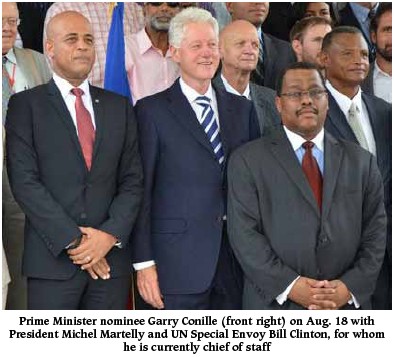
It is a common misconception, both in Haiti and abroad, that the country’s president holds executive power. In fact, his main power is to nominate the man or woman who does: the Prime Minister.
President Michel Martelly, after shunning consultations with the heads of Parliament’s two chambers (as the Constitution demands), saw his first two hard-line nominees – Daniel Gérard Rouzier and Bernard Gousse – rejected by the Parliament, which must ratify the candidate. This stand-off set off alarms in Washington, which saw the President it had shoe-horned into office still floundering without a government over three months after his May 14 inauguration. |
Sunday, September 4, 2011
Garry Conille’s Nomination as Prime Minister: Washington puts its foot down!
| By Yves Pierre-Louis Haitiliberte | |

After Parliament’s rejection of two prime ministers nominated by President Joseph Michel Martelly, various sectors in Haiti and the so-called "friends of Haiti" began to express their concern about the president’s inability to appoint a successor to the currently resigned Prime Minister, Jean Max Bellerive. Martelly’s outright refusal to negotiate and divvy up government posts with the Parliament’s majority political platform led the country into a political stalemate for more than three months. President Martelly and his team apparently did not understand the principles of power-sharing, and this has opened the door yet again to the meddling of imperialist and neo-colonial foreign powers.
So, on the evening of Wednesday, Aug. 24, six senators from the Senate’s “Group of 16,” controlled by former President René Préval’s Inite party, met with U.S. diplomats led by U.S. Ambassador to Haiti, Kenneth Merten. After that meeting, the Senators would not utter a word to the press. They were apparently holding state secrets to which the Haitian people had no right. |
UN Denied Sex Abuse Before Video Came Out in Haiti, Where New DPKO Chief Ladsous Defended Ouster of Aristide
By Matthew Russell Lee
 UNITED NATIONS, September 3 -- Video depicting UN peacekeepers committing sexual abuse in Haiti has surfaced, two weeks after the UN asked Inner City Press' August 17 questions about the abuse by saying on August 18 that its "investigation was finalized... these allegations were unfounded."
The UN never retracted this denial, or whitewash, even as the cell phone video Inner City Press asked about became public.
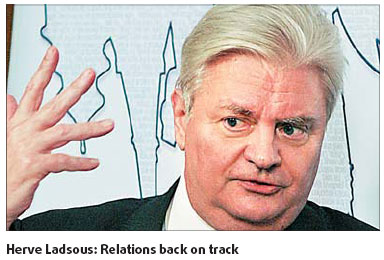
This classic UN cover-up comes at a time when UN Secretary General Ban Ki-moon has just named as the new head of UN Peacekeeping a French bureaucrat, Herve Ladsous, who was a public face of France's call in 2004 for Haiti president Jean-Bertrand Aristide to leave the post to which he was elected.
Saturday, September 3, 2011
Sept. 2, 2011 —U.N. Peacekeepers Accused of Sexually Assaulting Haitian Teen
By ANSEL HERZ, MATTHEW MOSK and RYM MOMTAZ
Alleged Assault Caught on Video, Shows Victim Held Down By Uniformed Men:
Haitians in this remote seaside town are demanding an investigation into allegations that United Nations peacekeeping troops pinned down an 18-year-old Haitian man and subjected him to a humiliating sexual assault.
The alleged assault occurred in July, but graphic cell phone video surfaced in recent days, showing what appears to be the four UN troops in camouflage and some wearing the trademark sky blue berets attacking the man. As the video began circulating through this coastal village, it sparked a growing sense of outrage there and prompted the victim's mother and father to seek criminal charges against the United Nations peacekeeping officers, who are from Uruguay. Both parents submitted written depositions on Wednesday in Port Salut's courthouse.
A medical certificate filed with the court in Haiti and obtained by ABC News, alleges the victim was beaten and had sustained injuries consistent with having been sexually assaulted.
The alleged assault occurred in July, but graphic cell phone video surfaced in recent days, showing what appears to be the four UN troops in camouflage and some wearing the trademark sky blue berets attacking the man. As the video began circulating through this coastal village, it sparked a growing sense of outrage there and prompted the victim's mother and father to seek criminal charges against the United Nations peacekeeping officers, who are from Uruguay. Both parents submitted written depositions on Wednesday in Port Salut's courthouse.
A medical certificate filed with the court in Haiti and obtained by ABC News, alleges the victim was beaten and had sustained injuries consistent with having been sexually assaulted.
Saturday, August 27, 2011
Wave of Illegal, Violent Evictions Swells in Port au Prince
 |
| Two smiling children in Champs de Mars campin the neighboring of Natitional Palace, Feb.2010. Photo by Wadner Pierre |
First published on HuffingtongPost
Mathias O is 34 years old. He is one of about 600,000 people still homeless from the January 2010 earthquake in Haiti. He lives with his wife and her 2 year old under a homemade shelter made out of several tarps. They sleep on the rocky ground inside. The side tarp walls are reinforced by pieces of cardboard boxes taped together. Candles provide the only inside light at night. There is no running water. No electricity. They live near a canal and suffer from lots of mosquitoes. There are hundreds of families living in tents beside him. This is the third tent community he has lived in since the earthquake.
Monday, August 22, 2011
Martelly Still Unable to Appoint New PM

Published by IPS
PORT-AU-PRINCE, Aug 22, 2011 (IPS) - Almost three months since he was sworn in as the country’s president, Michel J. Martelly has already attempted to appoint two prime ministers to guide his government. Bernard Gousse, a minister of justice under the Gérard Latortue dictatorship (2004-2006) and businessman Daniel Rouzier, were both rejected by Haitian lawmakers.
Rouzier was rejected by lower chamber over technicalities. Gousse was rejected by a group of 16 legislators in the Senate because of his appalling human rights record. Under Gousse, the jails were filled with political prisoners - mostly people from poor neighbourhoods where there was strong support for ousted former President Jean-Bertrand Aristide.
The country is now suffering because there is no prime minister to form a new government to apply the programme of the new president. When he campaigned, Martelly promised to send all Haitian children to school for free. The Haitian people are waiting for him to deliver his promise in September when schools reopen theirs doors.
Sunday, August 21, 2011
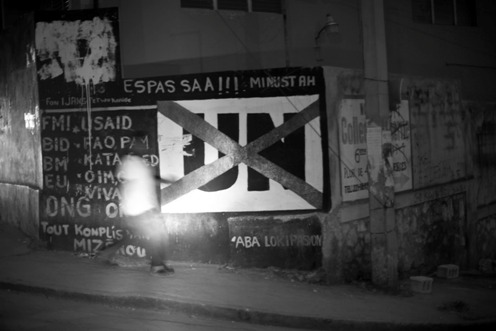
Bye-Bye MINUSTAH!
By Dady Chery.
Published first on Axis of Logic
Monday, Aug 15, 2011
Photograph: Ben Depp
|
| |
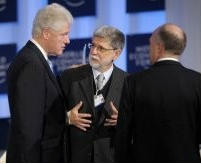
| L-R Bill Clinton, US Envoy to Haiti, Brazilian Defense Minister Celso Amorim and Robert Greenhill, president of the International Canadian Agency for the Development (ACDI) negotiating Haiti's future at Davos. |
Saturday, August 20, 2011
Haiti: Interview with Ambassador of Venezuela to Haiti, Mr. Pedro Gonzalez Canino
 Print This ShareThis
By Lionel Lafortune & Ambassador Canino. Translated for Axis of Logic by Dady Chery
Haiti Progrès. Axis of Logic (Translation)
Wednesday, Jul 20, 2011
Translated from Haiti Progrès for Axis of Logic by Dady Chery*
July 19, 2011
This interview was conducted on the 200th anniversary of the independence of Venezuela. In recent years Venezuela has consistently provided Haiti with invaluable support and obviously has not forgotten the support given to help free herself from the metropolitan power.
Ambassador Canino: I apologize for being unable to see you last week. We were busy with the work of cooperation between Venezuela and Haiti.
Lionel Lafortune (Haiti Progrès): Good morning, Mr. Ambassador. Thank you for seeing us. Please tell us about the 200th anniversary of the independence of the Bolivarian Republic of Venezuela. We know that your country is a true friend of Haiti. How do you see the participation of our ancestors in her liberation?
|
|
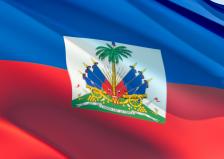
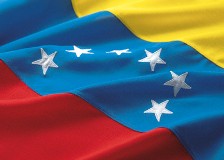
This interview was conducted on the 200th anniversary of the independence of Venezuela. In recent years Venezuela has consistently provided Haiti with invaluable support and obviously has not forgotten the support given to help free herself from the metropolitan power.
Ambassador Canino: I apologize for being unable to see you last week. We were busy with the work of cooperation between Venezuela and Haiti.
Lionel Lafortune (Haiti Progrès): Good morning, Mr. Ambassador. Thank you for seeing us. Please tell us about the 200th anniversary of the independence of the Bolivarian Republic of Venezuela. We know that your country is a true friend of Haiti. How do you see the participation of our ancestors in her liberation?
Tuesday, August 16, 2011
Is Haiti's Church Hierarchy Failing in its Mission? Bishop Louis Kébreau’s Immoral Advice to Martelly
era
By Wadner Pierre
Did Catholic Bishop Louis Kébreau, President of the Haitian Episcopal Conference, call on Haitian President Michel Martelly to be ruthless and dictatorial?
That is what many Haitians believe after Kébreau, the only bishop to attend Martelly’s inauguration, urged the president to “put his Sweet Micky pants on” in order to “put Haiti back on track,” in a recent interview with Radio Vision 2000. He later said that he was calling on Martelly to enforce “law and order and discipline.”
“Sweet Micky” was the name of Martelly’s vulgar konpa music persona, whose greatest claim to fame was as the principal cheerleader for Haiti’s bloody 1991 and 2004 coups d’état. “Sweet Micky” defended and celebrated the repression that followed Aristide’s overthrows, during which a combined total of some 8,000 Haitians were killed.
Now President Martelly remains without a Prime Minister because both of his nominees – Daniel Gérard Rouzier and Bernard Honorat Gousse – were staunch defenders of the coups. The Parliament rejected both of them. | |||||


Thursday, August 11, 2011
Brazil Needs to Quit Haiti
 |
| Brazilian occupying troops, march 28, 2011 by Wadner Pierre |
Mark Weisbrot (CEPR.net)
U.S. diplomatic cables now released from Wikileaks make it clearer than ever before that foreign troops occupying Haiti for more than seven years have no legitimate reason to be there; that this is a U.S. occupation, as much as in Iraq or Afghanistan; that it is part of a decades-long U.S. strategy to deny Haitians the right to democracy and self-determination; and that the Latin American governments supplying troops -- including Brazil -- are getting tired of participating.
Monday, July 18, 2011
Pourquoi, Bernard Gousse ne devrait pas être le prochain Premier Ministre d’Haïti
Par: Wadner Pierre
En 2004, j'étais en Haïti vivant l'injustice que Bernard Gousse infligeait à son propre peuple pendant qu’il servait l'élite haïtienne et la «Communauté Internationale». Comme beaucoup de victimes de Gousse, j'étais oblige d’aller vivre dans le marronnage –dans mon cas, il venait après l'arrestation du regretté Père Gérard Jean-Justice, un éminent supporteur de Fanmi Lavalas et militant des droits humains. Sous la dictature de Gérard Latortue, Gousse dirigeait le ministère de la Justice - une machine d’injustice qui était la pour remplir les prisons haïtiennes avec les prisonniers politiques, généralement ciblant les plus vulnérables.
 |
| Bernard Gousse, photo Wadner Pierre 2009 |
Saturday, July 16, 2011
Medics and Lavalas Supporters in Port-au-Prince Celebrate Birthday of Former President Jean-Bertrand Aristide
Photos and article by Wadner Pierre*

Sunday, July 10, 2011
Why Bernard Gousse Shouldn't Be Haiti's Next Prime Minister
By: Wadner Pierre
First publihsed on San Francisoc Bay View
 |
| Photo by Wadner Pierre 2009 |
In 2004, I was in Haiti living under the injustice Bernard Gousse inflicted on his own people while serving the Haitian elite and the "International Community". Like many of Gousse's victims, I was driven into hiding - in my case it came after the arrest of the late Father Gerard Jean-Justice, a prominent Lavalas leader and human rights activist. Under the dictatorship of Gerard Latortue, Gousse ran the Ministry of Justice - an injustice machine that filled Haitian jails with political prisoners, usually targeting the most vulnerable.
Here are seven reasons why Gousse shouldn't be Haiti's next Prime Minister
1) Gousse became the Minister of Justice after the 2004 coup against Haiti's democratically elected President Jean-Bertrand Aristide. Gousse was considered as one of the most powerful men in the U.S-backed regime that ruled from 2004 to 2006. In the 1990s Gousse served in the military dictatorship of Raul Cedras; a regime that used the FRAPH death squads and brutal FAd'H forces to murder people in the slums and countryside.
Subscribe to:
Posts (Atom)